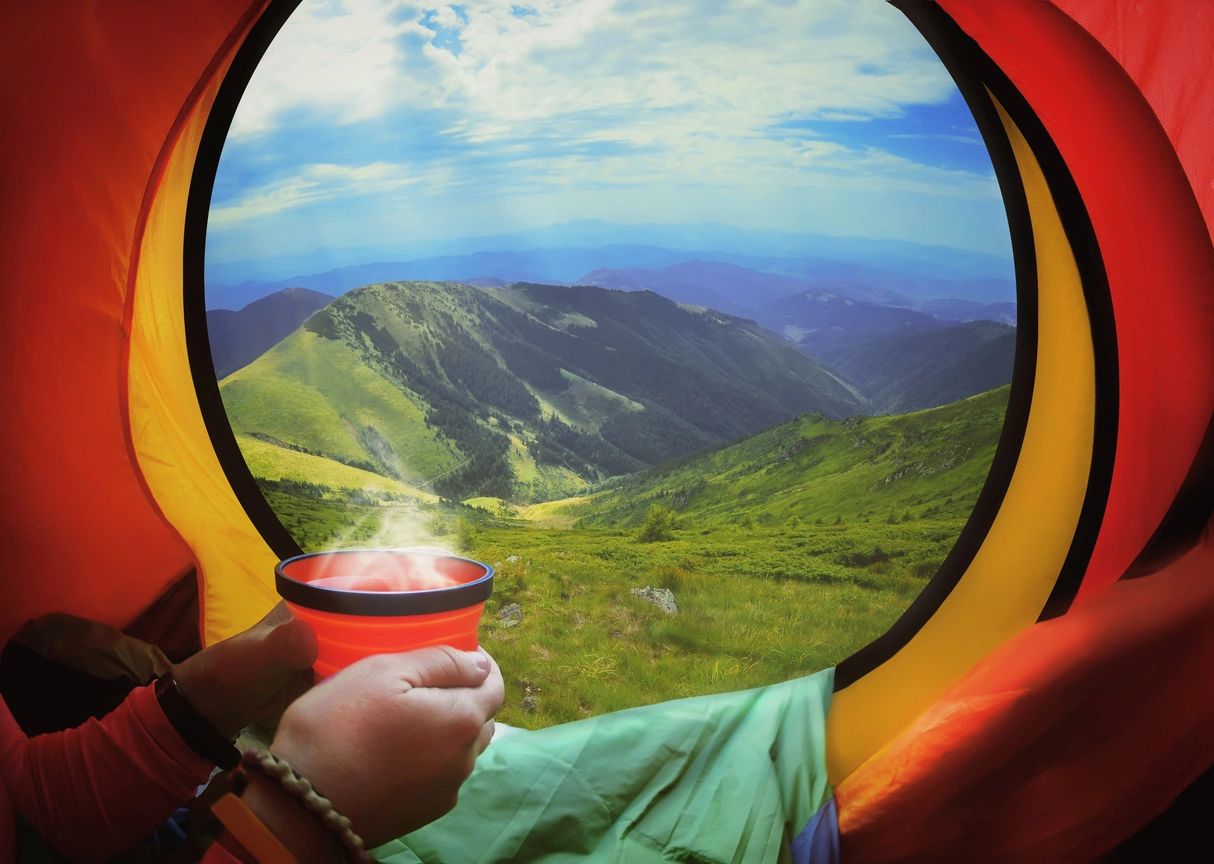
Imagine waking up to a breathtaking vista, the crisp mountain air filling your lungs. But before you can experience that, you need a reliable shelter—a tent that can handle the weather and keep you cozy. That’s where this guide comes in! We’ll cut through the jargon to help you navigate the market and find the best 2-person camping tents. Whether you are planning a weekend getaway or a long-haul adventure, we’ll be your campfire companions, sharing essential intel on top-tier brands like Marmot, The North Face, and REI. We’ll break down key features like heavy-duty weatherproofing to shield your large group from unexpected downpours and intuitive designs that ensure you can set up your home-away-from-home in a flash.
By the end of this guide, you’ll be a pro at identifying the strengths and weaknesses of the latest models, ensuring that your next trip is comfortable, dry, and stress-free. So, grab your backpack, pack your sense of wonder, and let’s find the best 2-person camping tents to house your next unforgettable adventure!
Best 2-Person Tent for Comfort: NEMO Dagger OSMO 2P
NEMO Dagger OSMO 2P
If you and your partner place a premium on personal space, interior volume, and camp organization, the NEMO Dagger OSMO 2P is the gold standard for trail livability.
While many ultralight tents taper dramatically at the feet to shave weight, the Dagger OSMO maintains a strict, non-tapered rectangular floor plan. Reviewers heavily praise this layout because it allows a couple to lay down two standard 25-inch wide sleeping pads side-by-side without any overlap or crowding. Coupled with an updated hubbed pole geometry that pulls the side walls nearly vertical, it offers massive overhead space that completely eliminates the claustrophobic “coffin” feel.
Field testing across 2025 and 2026 confirms that NEMO’s proprietary OSMO poly-nylon ripstop fabric is an industry leader in foul weather. Unlike standard nylons, it naturally resists sagging and stretching when soaked, meaning the tent retains its tight structural pitch during overnight downpours. Testers also highlight the massive dual vestibules, which feature integrated gear tubs to keep dirty boots and heavy backpacks off the damp ground and out of your sleeping quarters.
Everything we recommend
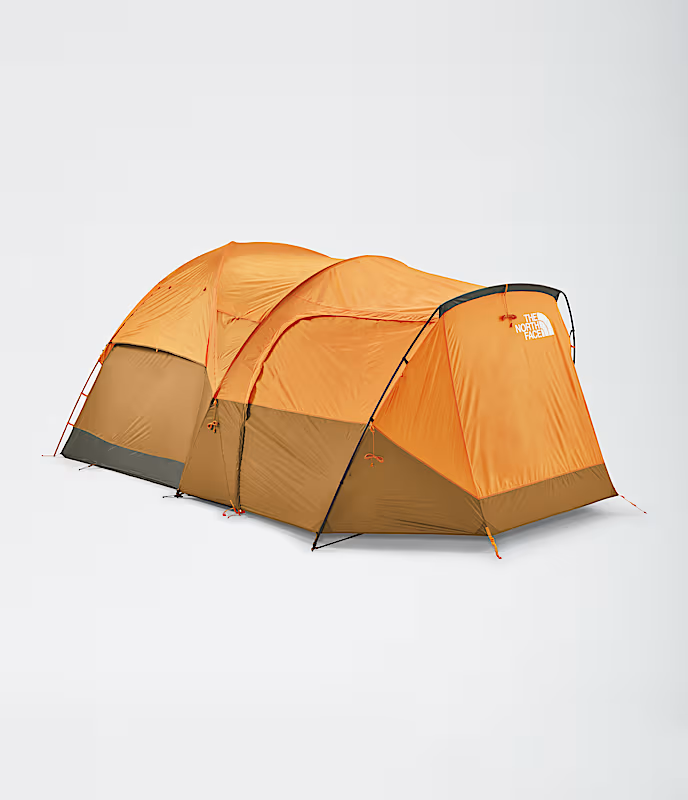
NorthNEMO Dagger OSMO 2P
Product Features
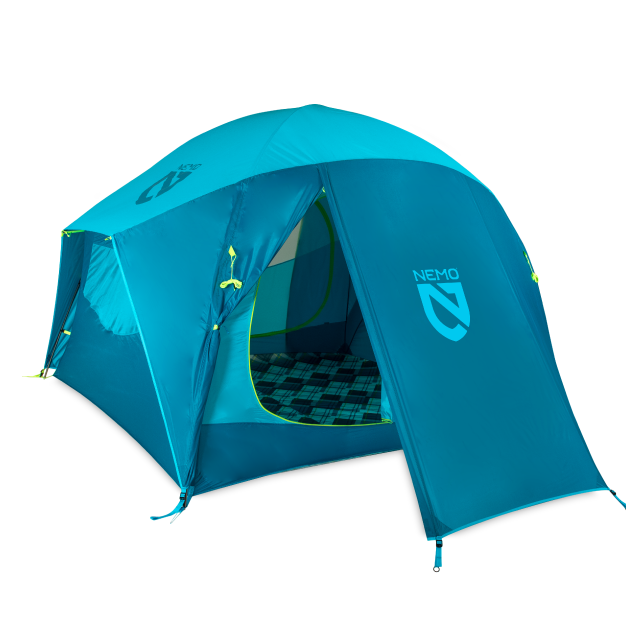
Big Agnes Copper Spur HV UL2
Product Features
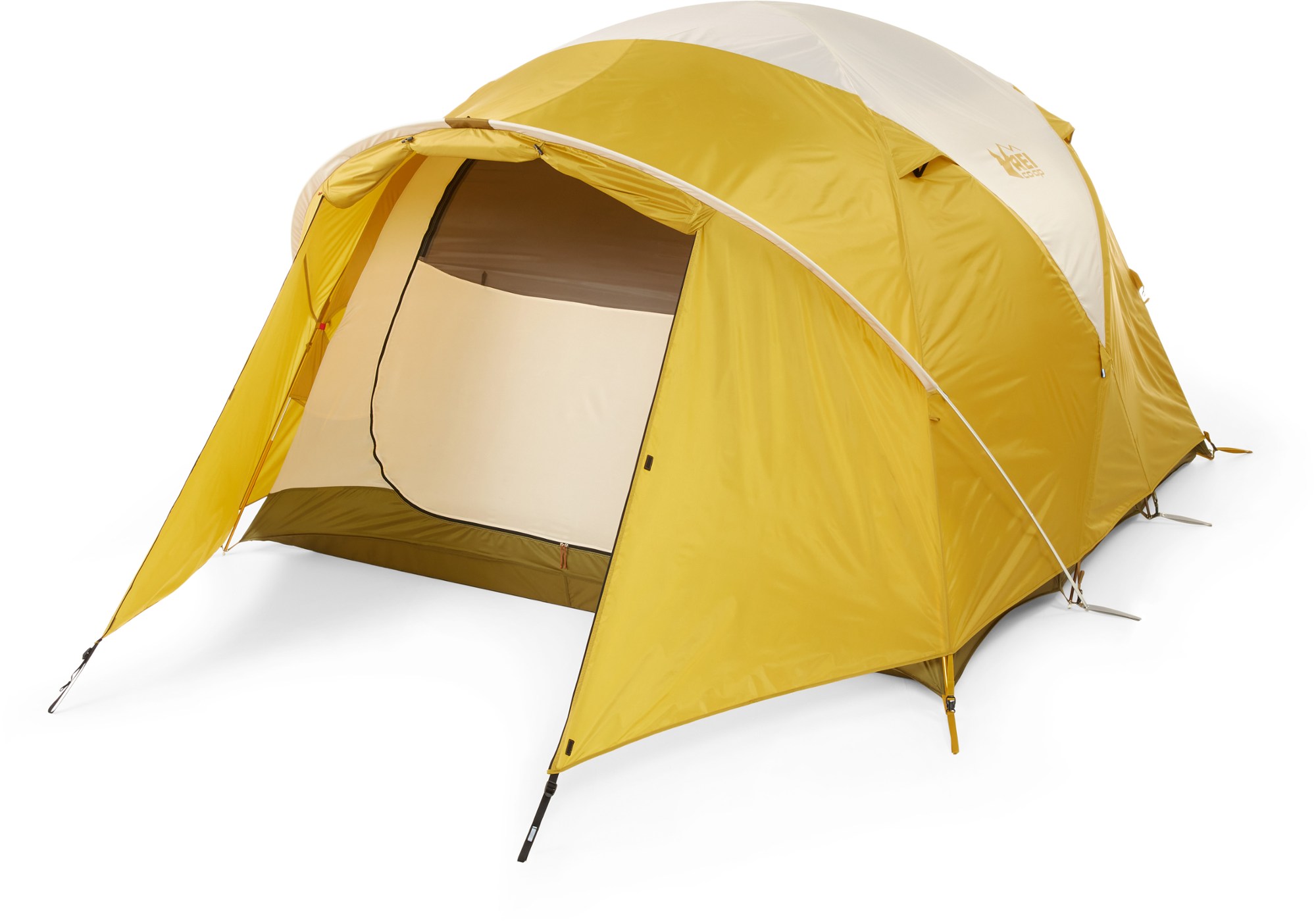
MSR Hubba Hubba LT 2P
Product Features
While all three of these heavyweights excel at keeping a large family dry, they approach liveable space entirely differently. To help you find the perfect match, we evaluated each tent against our four core field-testing metrics:
How we picked
- Dimensions: Total interior volume and vertical peak height.
- Ease of setup: Whether it’s a solo job or requires a full pit crew.
- Durability: Material denier thickness against wind, rocks, and dog claws.
- Size when packed: How much trunk space it devours.
NorthNEMO Dagger OSMO 2P
The Ultimate Basecamp Garage
The Consensus Verdict: The gold standard for messy families, gear-heavy hunters, or fishermen who want a massive, weather-proof integrated porch to live out of.
Big Agnes Copper Spur HV UL2
The No-Fuss Comfort Palace
The Consensus Verdict: The best pure “interior volume” tent for casual summer campers who want maximum floor space and a completely stress-free setup.
MSR Hubba Hubba LT 2P
The Two-Room Masterpiece
The Consensus Verdict: A massive, premium tunnel tent constructed from top-tier materials, perfect for large families demanding interior privacy and separate living zones.
Head-to-Head Analysis: Which Wins for Your Duo Setup?
When you’re sharing a shelter with a partner for days on end, small design details turn into make-or-break realities. Synthesizing testing data across the 2025 and 2026 seasons, here is how our top three comfort-focused models—the NEMO Dagger OSMO 2P, the Big Agnes Copper Spur HV UL2, and the MSR Hubba Hubba LT 2P—stack up in the field.
Livability, Privacy & Layout
Winner: NorthNEMO Dagger OSMO 2P If you want to avoid an absolute wall-to-wall squeeze, layout geometry is everything. The NEMO Dagger OSMO takes this crown because it features a true, non-tapered rectangular floor plan (90″ x 50″). Many tents, including the Big Agnes Copper Spur, taper significantly at the footbox to cut weight. That taper forces standard 25-inch sleeping pads to overlap and crowd your partner. The Dagger’s pre-bent pole structure pulls the side walls nearly vertical, creating vast “elbow room” at shoulder height. While the MSR Hubba Hubba also offers a non-tapered floor, it lacks the extra length and steep architectural volume that makes the NEMO feel like a backcountry palace.
External Storage & Utility
Winner: NorthNEMO Dagger OSMO 2P Managing dirty gear is a massive part of trail comfort, and NEMO completely dominates this category. The Dagger OSMO boasts a massive 24.2 square feet of total vestibule space—hardily beating the Big Agnes Copper Spur (18 sq. ft.) and crushing the MSR Hubba Hubba LT (16 sq. ft.). Furthermore, NEMO integrates two highly practical utility features that reviewers rave about: The Landing Zone: A protected gear tub that clips into the vestibule to keep your backpacks and boots completely off the damp ground. Nightlight Pockets: Overhead mesh pockets that diffuse your headlamp’s beam into a warm, even glow across the interior canopy. Honorable Mention: The Big Agnes Copper Spur features clever awning-style vestibules that can be staked out using your trekking poles, creating a great shade porch. However, for pure foul-weather gear storage, NEMO’s massive covered square footage and ground tubs win out.
Weather Protection & Wind Shedding
Winner: MSR Hubba Hubba LT 2P6 When a sudden shoulder-season storm rolls in and the wind starts howling, you want to be inside the MSR Hubba Hubba LT 2P. MSR has a legendary reputation for building bombproof architecture, and the latest iteration lives up to the legacy. Its unified, symmetrical hubbed pole configuration handles heavy snow loads and shifting lateral winds with zero structural twisting. The rainfly drum-tightens flawlessly, and its kickstand vents manage interior condensation beautifuly, keeping you bone-dry. The NEMO Dagger is a very close second here; its proprietary OSMO poly-nylon fabric naturally resists water absorption and stretching, meaning it won’t sag or flap loudly in midnight downpours. However, the Big Agnes Copper Spur falls behind in raw storm-worthiness; its ultralight 15-denier fabrics and delicate pole structure are designed to prioritize weight savings over surviving a high-altitude gale.
Final Recommendation
Buy the NEMO Dagger OSMO 2P if: You want a true, non-tapered rectangular floor plan that fits two wide sleeping pads seamlessly, crave massive covered vestibules with dedicated ground tubs to keep your gear dry, and prioritize ultimate living comfort on the trail.
Buy the Big Agnes Copper Spur HV UL2 if: You want a premium, feature-packed double-wall tent that heavily prioritizes weight savings, love clever interior organization pockets, and want the ability to turn your vestibule doors into trekking-pole awnings for a shaded porch view.
Buy the MSR Hubba Hubba LT 2P if: You camp in exposed, windy, or highly unpredictable backcountry environments, want a bombproof hubbed pole structure that resists high winds and heavy downpours, and value exceptional condensation management to stay completely dry.
The Research
Why you should trust us
I’m Dave Crossley, the founder and sole writer behind FishCampClimb.com. I’m an avid camper, rock climber, and fisherman who has spent years pitching tents, rigging lines, and testing outdoor gear across the backcountry and local campgrounds alike.
For This Guide:
- Deep-Dive Research: I’ve spent over 40 hours analyzing technical specifications, structural engineering, and the real-world durability of 4-person family camping tents.
- Synthesized Data: I deeply analyzed the long-term field-testing data and critical feedback published by the top five outdoor gear review authorities across 2025 and 2026, combining their expert findings with my own camping insights.
- Solo Editorial Rigor: Because I operate as a completely independent, single-author reviewer, I don’t have a corporate media room backing me. That means I personally scrutinize every single fabric denier rating, pole configuration, and rainfly shortcut to cut straight through the marketing fluff.
- Absolute Independence: I write and recommend with total editorial independence. My evaluations are driven strictly by performance, weather resistance, and build quality—never by brand partnerships or the business implications of an affiliate link.
Who this is for
If you hit the woods with a spouse, partner or friend, and still value your own sense of space, or you each have a substantial pack of outdoor gear, this guide is your roadmap.
Our top 2-person picks range from $500 to $585. While dropping nearly six hundred dollars on a tent is a serious investment, a premium basecamp shelter that handles severe weather, gives your camping duo room to breathe, and lasts for a decade of rugged use is worth every penny.
How we picked and tested
When you step up to a premium 2-person comfort tent, the stakes are vastly different than they are for minimalist, ultralight race gear. You aren’t trying to squeeze into a cramped, coffin-shaped nylon shell just to survive the night; you are looking for a backcountry shelter that actually preserves your personal space, keeps your gear organized, and makes sharing a tent with your partner a genuinely enjoyable experience.
To determine the absolute best comfort-focused 2-person tents for FishCampClimb.com, I bypassed the glossy manufacturer marketing and focused on real-world backcountry livability metrics:
- Non-Tapered Floor Geometry: Most standard 2-person backpacking tents aggressively taper at the footbox to shave weight. I prioritized tents that maintain a strict rectangular shape from head to toe. This layout ensures you and your partner can lay two premium, 25-inch wide sleeping pads side-by-side without them overlapping, wrinkling, or forcing you into each other’s space.
- Elbow Room & Vertical Volume: True comfort is about the volume above the floor. I evaluated the hubbed pole geometry and the placement of pre-bent architectural clips. Tents that pull the sidewalls nearly vertical scored much higher because they maximize shoulder room, allowing both campers to sit up straight, change clothes, or play cards simultaneously without rubbing elbows or bumping the canopy.
- Vestibule Space & Gear Management: Coexisting in a small space means keeping dirty gear out from under your feet. I heavily weighted the square footage of the external vestibules and looked for clever storage integrations. Features like protected ground tubs, expansive interior gear lofts, and diffuse lighting pockets were highly valued for their ability to keep the sleeping zone clean and organized.
- Fabric Tension & Sag Resistance: There is nothing more miserable than a rainfly that sags and flaps against the tent body during a midnight downpour. I analyzed the advanced fabric tech hitting the market, looking for high-performance poly-nylon blends or silicone-coated fabrics that naturally resist water absorption and stretching when wet, ensuring the tent maintains a drum-tight pitch through heavy storms.
For the testing data, I synthesized extensive field-test logs and technical tear-downs from the top five outdoor gear testing authorities across the 2025 and 2026 backpacking seasons. I tracked how these shelters performed during intense mountain thunderstorms, heavy high-altitude winds, and humid, condensation-prone valley bottoms. I paid close attention to long-term “pain points” identified by field testers—such as how easily a rainfly zipper snags in a hurry, whether the pole hub system is intuitive to pitch in a sudden downpour, and how well the fabrics hold up over months of repeated trail use.